
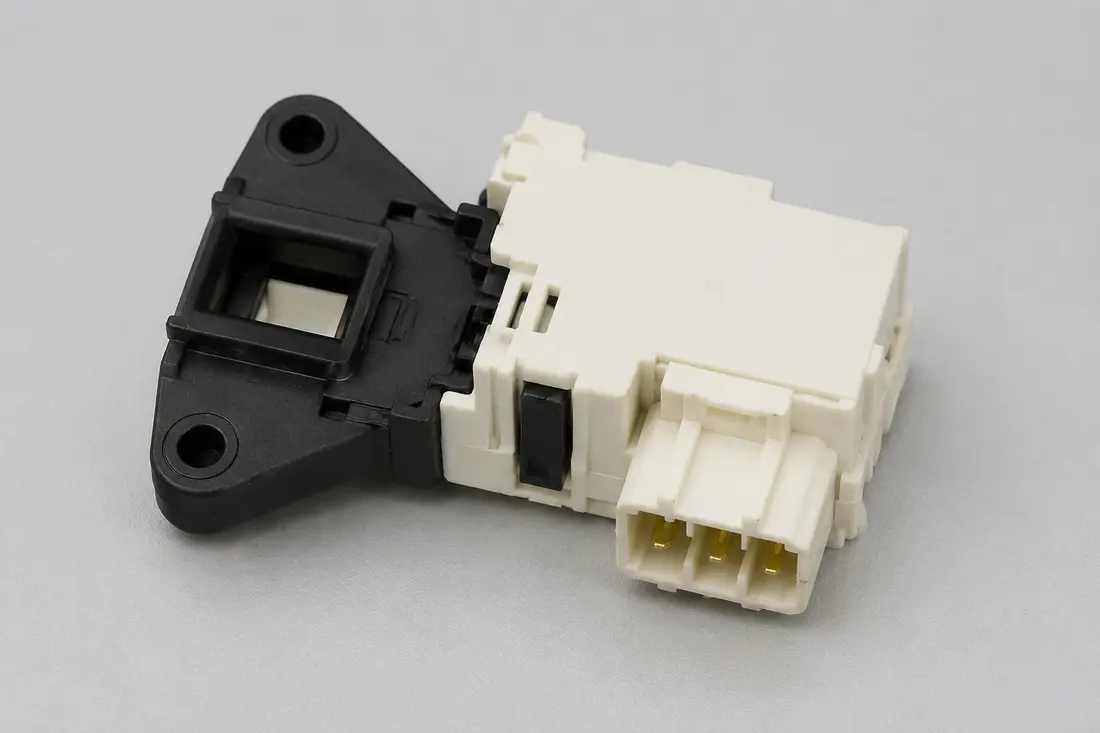
When a washer door remains locked, the visible symptom does not identify one failed part by itself. The cause can be mechanical, electrical, related to water flow, or caused by the installation. Accurate diagnosis helps avoid replacing parts based only on a guess.
What This Washer Symptom May Mean
Depending on the model and the point in the cycle where the problem appears, possible causes include:
- water remaining in the tub because the drain cycle did not complete
- a failed door-lock assembly
- incorrect water-level feedback
- a wiring or main-control fault that prevents the unlock command
Several of these conditions can produce very similar behaviour. The complete model number, error history, and controlled testing are important before a repair is recommended.
How the Washer Is Diagnosed
Professional diagnosis may include checking:
- whether the washer has drained completely
- drain-pump and water-level operation
- door-lock electrical feedback and mechanical movement
- control commands, wiring, and relevant error codes
The inspection is adapted to the washer design. Front-load, top-load, compact, stacked, and electronically controlled models do not all use the same components or test procedures.
Information to Prepare Before Service
- the complete model and serial numbers
- the cycle selected and the stage where the symptom occurs
- any error code exactly as displayed
- photos or a short video when movement, leakage, or noise is involved
- the service address and whether the washer is stacked or tightly installed
Do not disassemble the washer or bypass a door lock or safety device. If there is active leaking, a burning smell, or repeated breaker tripping, stop using the appliance until it can be assessed safely.
Repair or Replacement Decision
The practical decision depends on the failed system, parts availability, labour, the washer’s age and overall condition, previous repairs, and safe access. After diagnosis, the findings and estimate should be explained before approved work begins.