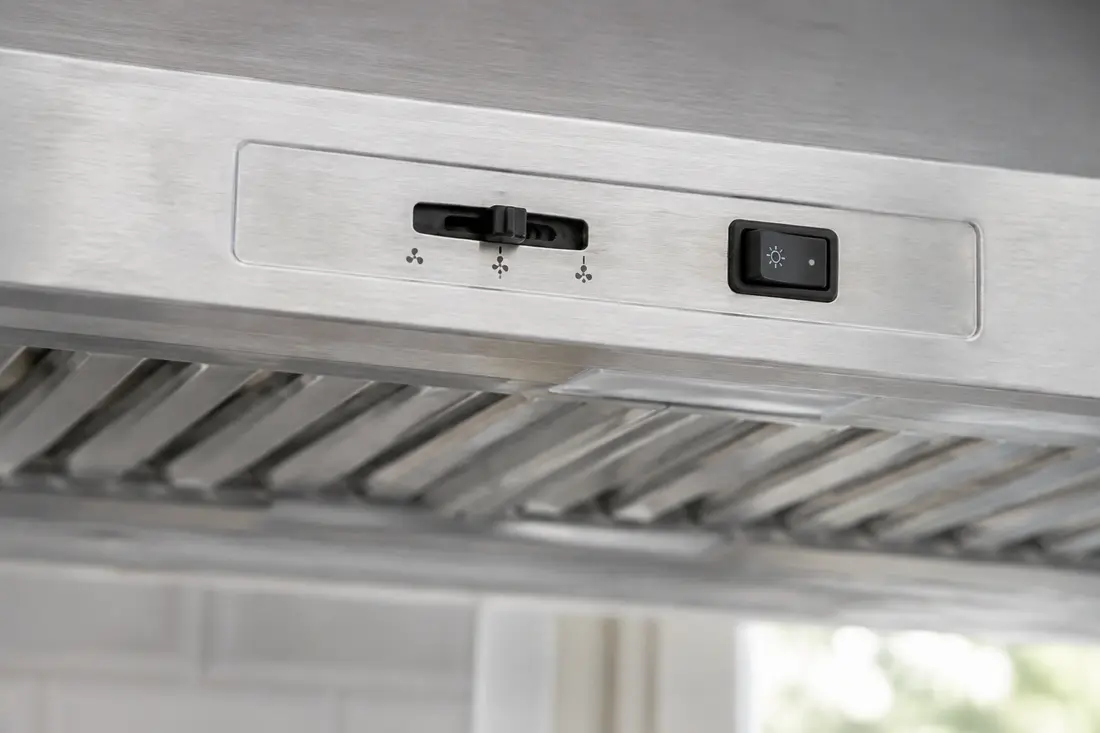
The blower is stuck on one speed, skips settings, or does not respond to speed commands. Range-hood performance depends on the appliance, filters, ducting, and installation, so the sound of a running fan alone does not confirm proper ventilation.
Common causes
- A rotary or push-button speed switch has failed
- The touch interface is not sending the correct command
- A motor capacitor or speed winding has a fault
- The electronic speed-control board or wiring is damaged
How the problem is diagnosed
Each requested speed is compared with the voltage or control signal delivered to the motor. Switch contacts, interface commands, capacitors, motor windings, connectors, and the main control are tested according to the model’s speed-control design.
Electrical and airflow findings are considered together. Appliance Repair Pro explains the diagnosis and provides an upfront estimate before approved work begins.
Information to prepare
Note which speeds work, whether the fan is stuck high or low, and whether lights and other controls respond normally. The full model number and a photo of the hood and duct arrangement can help identify the correct parts and service scope.
Repair or replace?
Switches, lights, capacitors, and some motors are often serviceable when parts are available. Replacement may make more sense when the hood has extensive grease damage, an unavailable integrated control, or an installation that cannot deliver adequate capture. Diagnosis helps separate an appliance repair from a duct or installation issue.