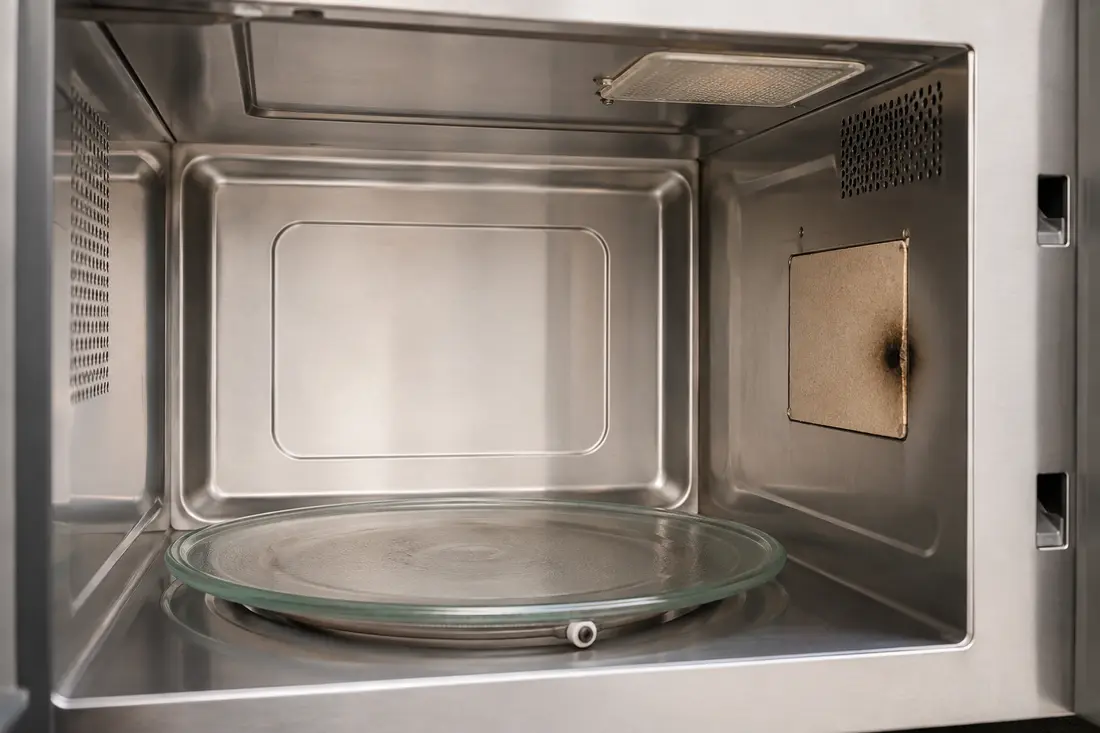
Visible arcing, snapping sounds, flashes, or burn marks may appear during operation. This symptom can have more than one cause, so the full model number and operating behaviour matter.
Common causes
- Metal, foil, twist ties, or metallic trim is inside the cavity
- Food residue or grease has carbonized
- The waveguide cover is damaged or contaminated
- The cavity coating, rack support, or another internal surface is damaged
These are diagnostic possibilities, not a parts list. The same symptom can be produced by a mechanical problem, a loose connection, or an electronic fault.
How the problem is diagnosed
With the appliance disconnected, a technician inspects the cavity, waveguide cover, rack supports, and door area for burn paths and damage. If the visible cause is not limited to removable residue or an unsuitable container, internal components and microwave leakage safety may also require assessment.
The findings should be explained before any repair begins. Appliance Repair Pro provides an upfront repair estimate, and no repair proceeds until you approve it.
Information to prepare before the visit
Identify where the flash appeared, what container or food was inside, and whether any burn mark remains after the unit is cool. A short video can also help when the symptom is intermittent, provided it can be recorded without operating an unsafe appliance.
Repair or replace?
The decision depends on the failed part, model age, parts availability, installation type, and the condition of the cavity, door, and controls. Built-in and over-the-range models may justify repair when the cabinet and door are sound; severe cavity or door damage can change that decision. A diagnosis allows you to compare the repair estimate with replacement and installation costs.