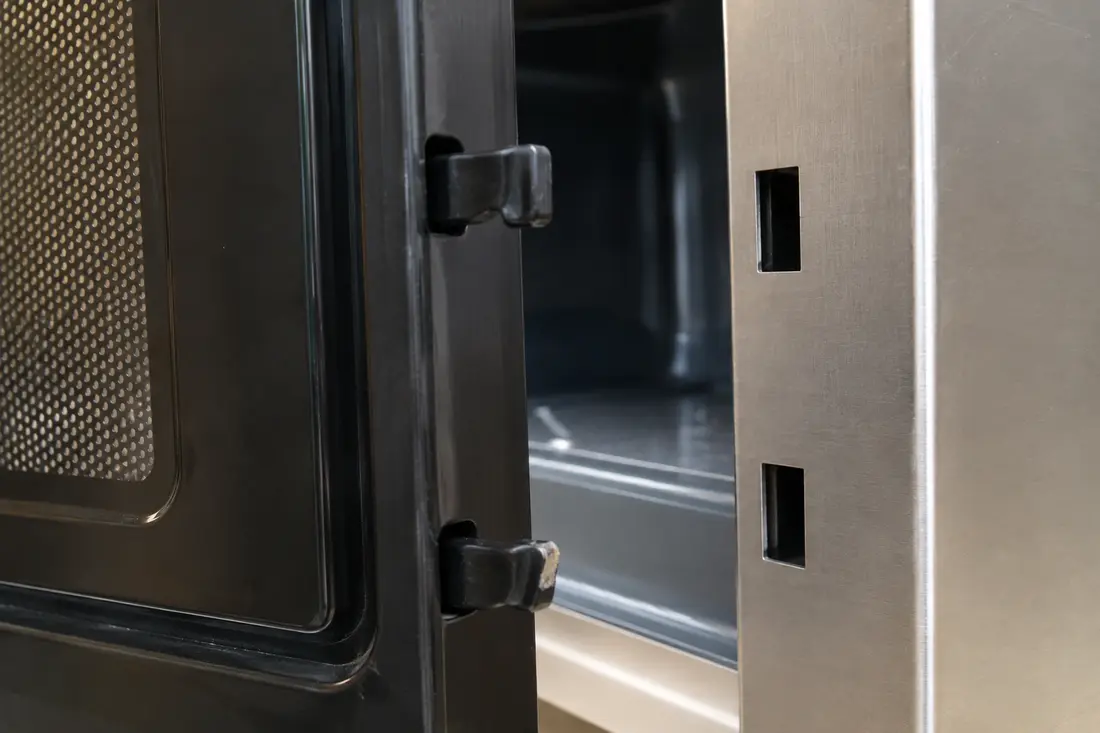
The display may say the door is open, the light may stay on, or the unit may refuse to start even though the door appears shut. This symptom can have more than one cause, so the full model number and operating behaviour matter.
Common causes
- A latch hook or door component is worn or damaged
- The door is misaligned at the hinges
- An interlock switch or its mounting bracket has shifted
- The control is not receiving the expected interlock sequence
These are diagnostic possibilities, not a parts list. The same symptom can be produced by a mechanical problem, a loose connection, or an electronic fault.
How the problem is diagnosed
The door alignment, latch engagement, switch mounts, and interlock timing are inspected together. A technician verifies that every safety switch changes state in the correct order and that the door closes without excessive force.
The findings should be explained before any repair begins. Appliance Repair Pro provides an upfront repair estimate, and no repair proceeds until you approve it.
Information to prepare before the visit
Note whether lifting or pressing the door changes the symptom and whether the unit was recently moved or the door was struck. A short video can also help when the symptom is intermittent, provided it can be recorded without operating an unsafe appliance.
Repair or replace?
The decision depends on the failed part, model age, parts availability, installation type, and the condition of the cavity, door, and controls. Built-in and over-the-range models may justify repair when the cabinet and door are sound; severe cavity or door damage can change that decision. A diagnosis allows you to compare the repair estimate with replacement and installation costs.