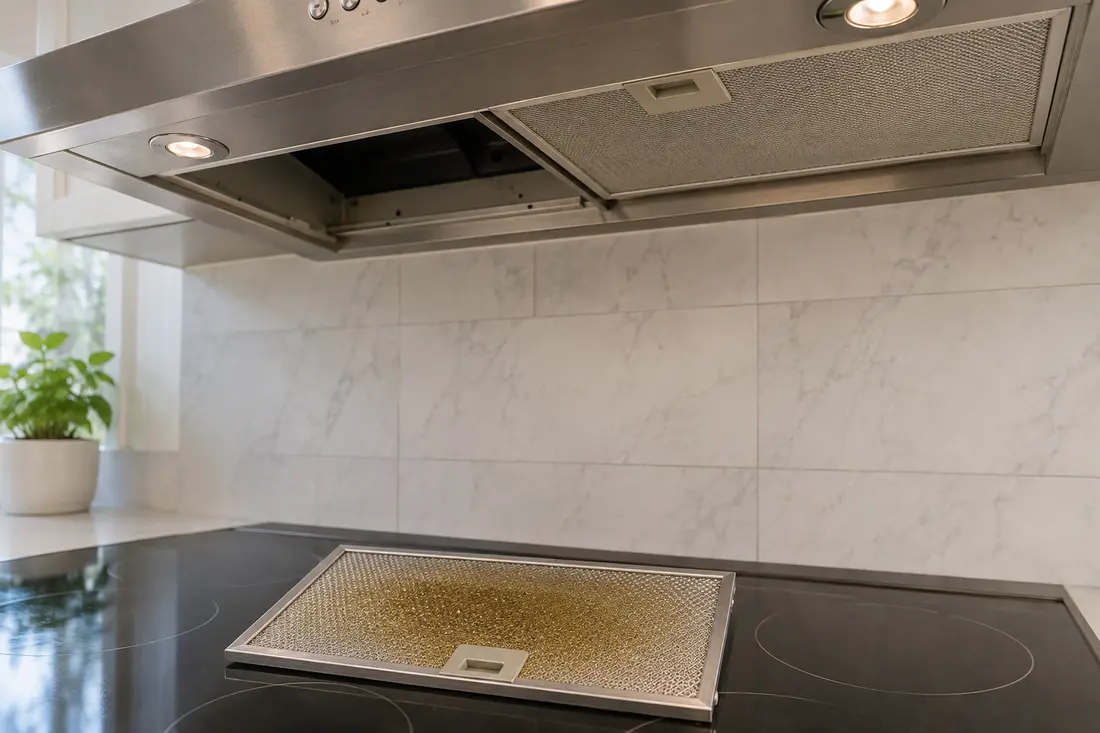
Filters look saturated, cooking odours linger, and airflow drops even though the blower can be heard. Range-hood performance depends on the appliance, filters, ducting, and installation, so the sound of a running fan alone does not confirm proper ventilation.
Common causes
- Reusable metal filters are loaded with grease
- Disposable charcoal or combination filters are overdue for replacement
- Grease has accumulated on the blower wheel or internal air path
- Restricted filters have contributed to motor overheating or control damage
How the problem is diagnosed
The filter type and service interval are identified, then the accessible air path, blower wheel, motor, and duct are inspected. After proper filter service, airflow and fan current are checked to determine whether grease loading has caused a secondary mechanical or electrical problem.
Electrical and airflow findings are considered together. Appliance Repair Pro explains the diagnosis and provides an upfront estimate before approved work begins.
Information to prepare
Confirm the hood model, whether it is ducted or recirculating, and when the metal or charcoal filters were last serviced. The full model number and a photo of the hood and duct arrangement can help identify the correct parts and service scope.
Repair or replace?
Switches, lights, capacitors, and some motors are often serviceable when parts are available. Replacement may make more sense when the hood has extensive grease damage, an unavailable integrated control, or an installation that cannot deliver adequate capture. Diagnosis helps separate an appliance repair from a duct or installation issue.