
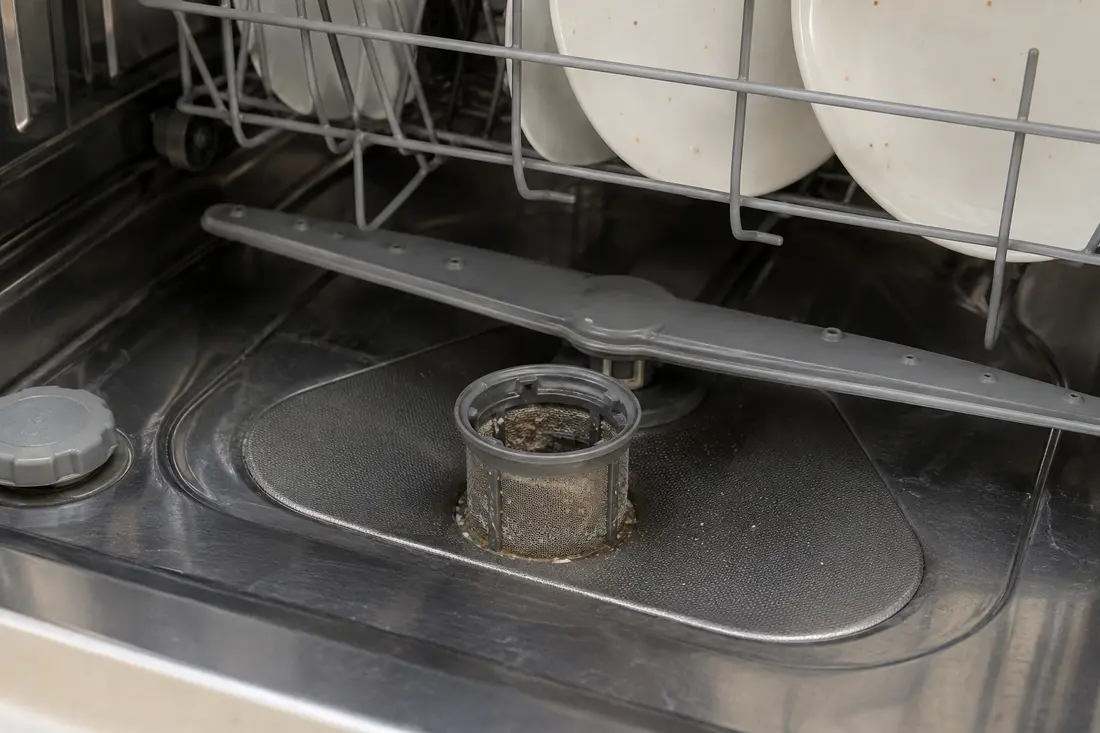
When a dishwasher leaves dishes dirty or gritty, the complaint can involve water supply, circulation, drainage, heating, sealing, sensing, or electronic controls. The correct repair depends on confirming which system is not performing as designed.
What This Dishwasher Symptom May Mean
Possible causes include:
- restricted spray arms, filters, or water passages
- low circulation pressure from a weak or obstructed circulation pump
- incorrect water level or inlet-valve performance
- detergent, temperature, loading, or control conditions
Similar symptoms can be produced by different faults. For example, poor washing can come from low water level, low circulation pressure, restricted spray paths, or operating conditions rather than one universal part.
How the Dishwasher Is Diagnosed
Professional diagnosis may include checking:
- water level and fill performance
- filter, sump, and spray-arm condition
- circulation pressure and pump operation
- water temperature, cycle selection, and control response
The appliance should be observed through the relevant fill, wash, drain, heat, or dry stage. Model-specific error codes and test modes are useful only when interpreted with the physical findings.
Information to Prepare Before Service
- the complete model and serial numbers
- the selected cycle and stage where the problem appears
- any error code or flashing-light pattern
- photos or video of leakage, standing water, or unusual operation
- whether plumbing or installation work was done recently
Do not run a leaking dishwasher unattended. Do not bypass the door latch, flood switch, or other safety control.
Repair or Replacement Decision
The practical option depends on the failed system, parts availability, appliance age and condition, labour, previous leaks or repairs, and installation access. Findings and an estimate should be explained before approved work begins.