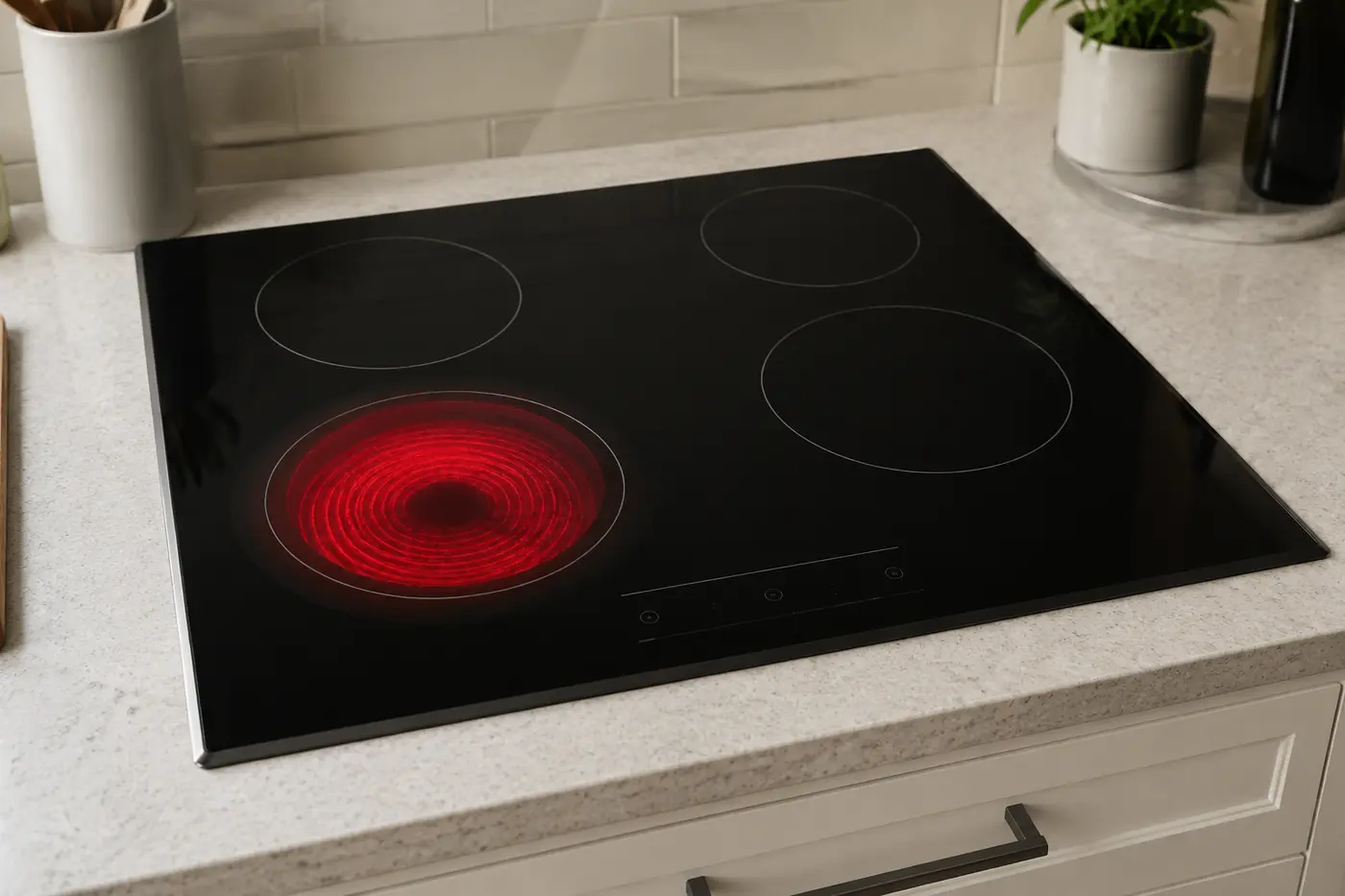
The glass becomes unusually hot beyond the active zone, heat does not reduce as expected, or surrounding trim becomes excessively hot. Because cooktops combine high heat with high-current electrical parts—and some models also involve gas—the appliance type must be identified before service.
Common causes
- A zone control or relay is stuck at high output
- A temperature limiter or sensor is not regulating correctly
- Incorrect cookware size or placement is concentrating heat
- Ventilation, installation clearance, or an underlying component is compromised
How the problem is diagnosed
A technician checks actual zone control, cycling behaviour, sensors or limiters, cookware interaction, ventilation, cabinet clearance, and signs of heat damage. Localized normal residual heat is separated from uncontrolled output or excessive cabinet heating.
This article applies to electric glass and induction cooktops. The diagnosis and an upfront estimate are explained before approved work begins.
Information to prepare
Note which zone was used, the cookware size, selected setting, and whether heat remains after the control is switched off. Keep the model and serial number available; they are often printed on the underside or in the installation documentation.
Repair or replace?
The decision depends on the failed control or element, parts availability, glass condition, installation access, and appliance age. A serviceable switch or cooking zone may justify repair, while cracked glass, unavailable electronic modules, or multiple heat-damaged components can make replacement more practical.