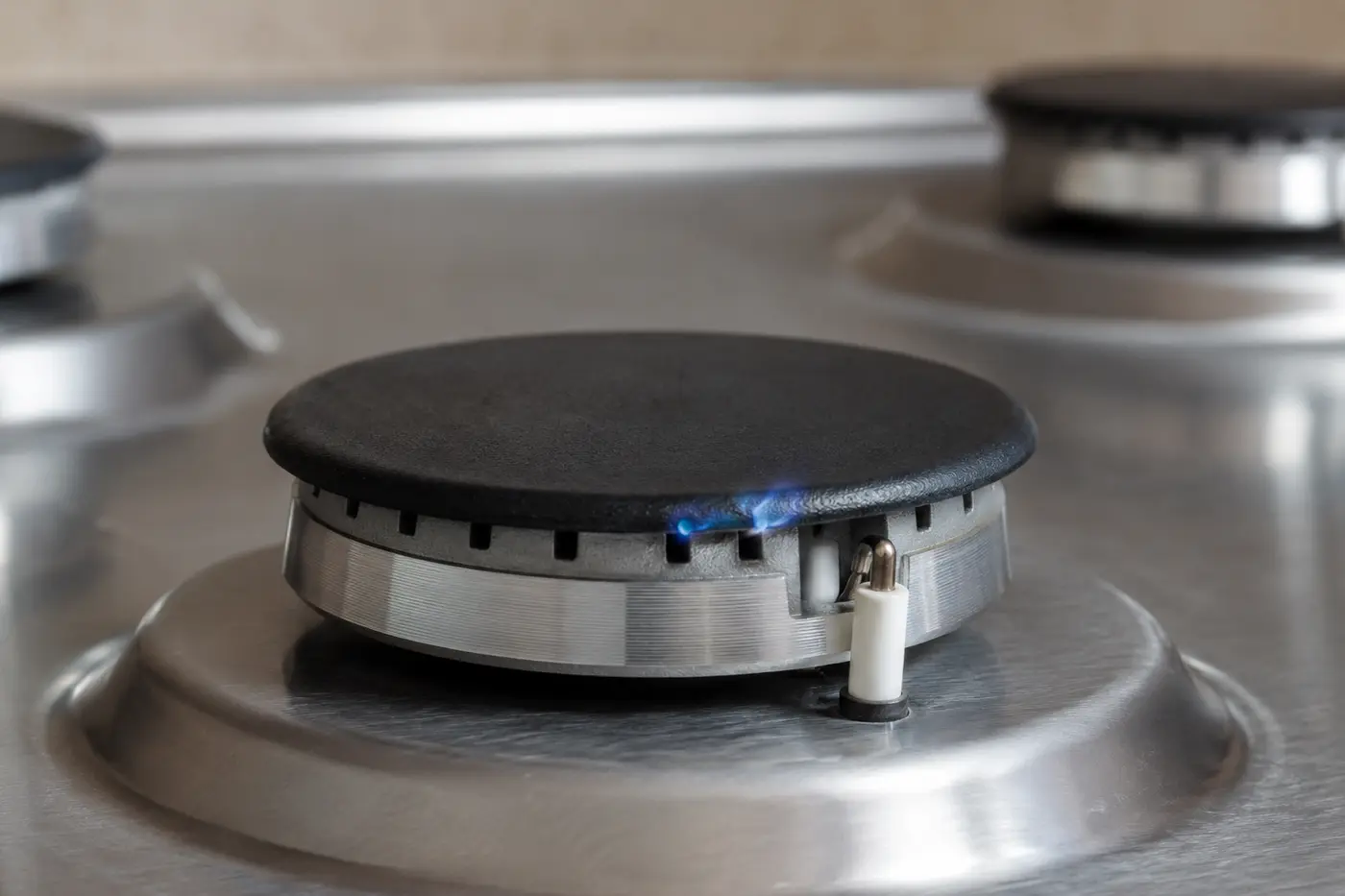
A gas burner may spark weakly, take longer to light, or fail to ignite consistently. Because cooktops combine high heat with high-current electrical parts—and some models also involve gas—the appliance type must be identified before service.
Common causes
- Moisture or residue is affecting the burner cap, electrode, or spark path
- The burner cap is not seated correctly
- An igniter, wire, spark module, or switch circuit is failing
- Gas pressure, burner components, or another regulated gas-side condition requires assessment
How the problem is diagnosed
The appliance must first be assessed for gas safety. A qualified technician checks burner assembly condition, electrode position, electrical ignition components, and—within their licensing—gas delivery and combustion-related conditions. Electrical spark symptoms should not be treated as proof that the gas side is safe.
Appliance Repair Pro’s standard published service scope covers electric household appliances; regulated gas work is not offered. This information helps identify when an appropriately licensed gas technician is required. The diagnosis and an upfront estimate are explained before approved work begins.
Information to prepare
Note which burner is affected, whether clicking is present, whether the issue began after cleaning, and the full model number. Keep the model and serial number available; they are often printed on the underside or in the installation documentation.
Repair or replace?
The decision depends on the failed control or element, parts availability, glass condition, installation access, and appliance age. A serviceable switch or cooking zone may justify repair, while cracked glass, unavailable electronic modules, or multiple heat-damaged components can make replacement more practical.