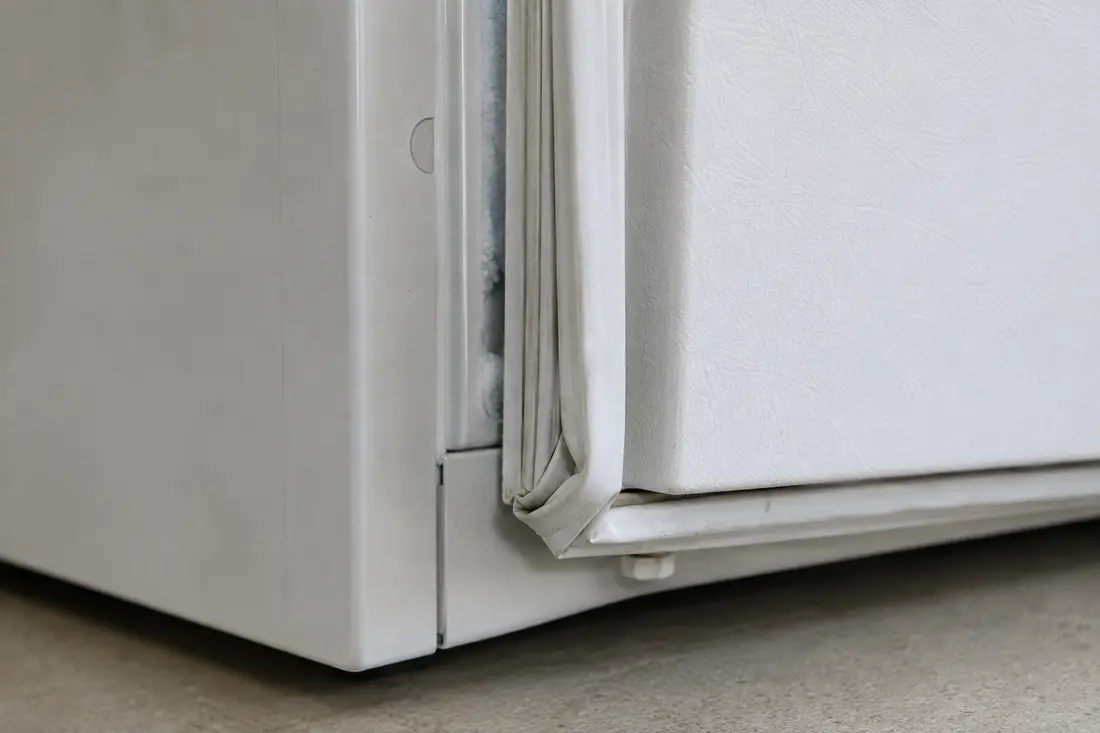
The door springs open, shows a visible gap, forms condensation, or requires extra pressure to stay shut. Freezer temperatures can change slowly, so observation and measured temperature are more useful than guessing from one item.
Protect food first
Avoid forcing the door or using improvised latches that can damage the cabinet. Protect food if the seal cannot maintain temperature.
Common causes
- A package, basket, or ice buildup is obstructing the door
- The cabinet is not level or the hinges are misaligned
- The gasket is dirty, distorted, torn, or pulling away
- The door or liner is warped or a closer component is worn
Several faults can create the same symptom. A diagnosis should identify the failed system before a part is recommended.
How a technician diagnoses the problem
The cabinet level, hinge alignment, door closing force, gasket contact, and obstruction points are checked around the full perimeter. A technician also looks for frost patterns that reveal where warm air enters and confirms whether adjustment or part replacement is appropriate.
Any sealed-system work requires appropriate refrigeration tools and procedures. The findings and an upfront estimate are explained before approved work begins.
What to note before the visit
Photograph the gap, note where paper slips easily around the gasket, and remove only obvious package obstructions before service. Keep the model and serial number available and avoid resetting controls repeatedly, because the operating history can help diagnosis.
Repair or replace?
Repair value depends on the failed component, freezer age and condition, parts availability, food-loss risk, and whether the fault is in an accessible fan or control versus the compressor or sealed system. A measured diagnosis gives you the information needed to compare repair with replacement.