
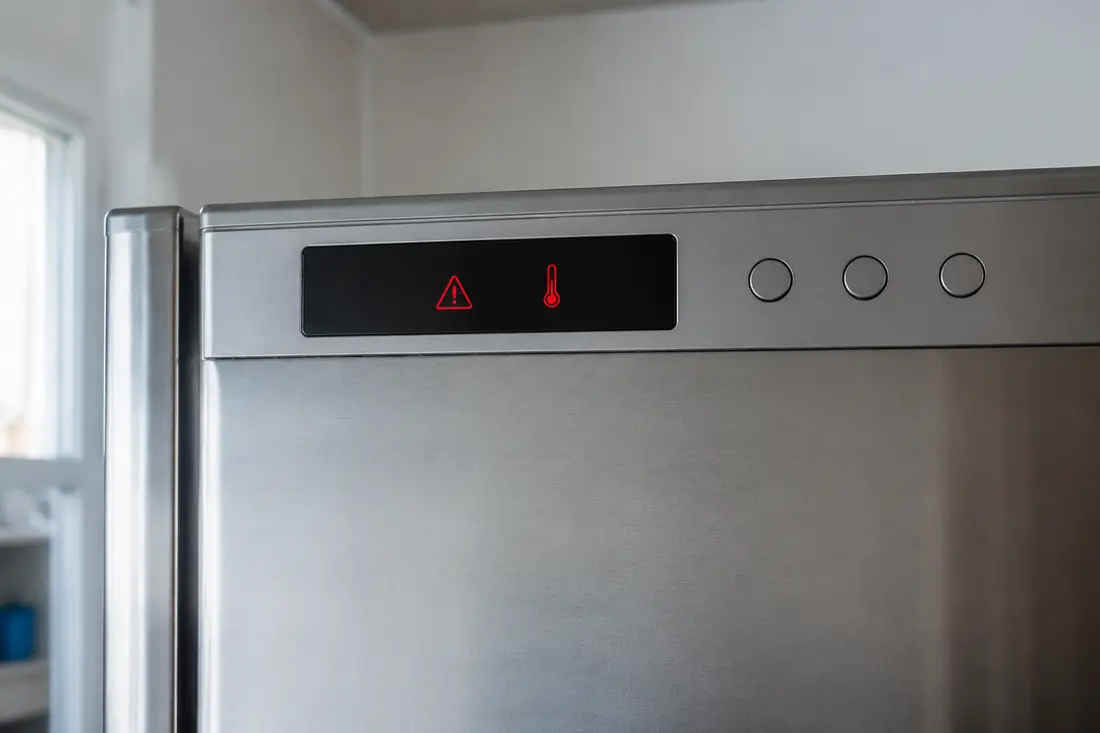
A high-temperature, door, power-loss, or general alarm remains active or keeps returning. Freezer temperatures can change slowly, so observation and measured temperature are more useful than guessing from one item.
Protect food first
Treat a temperature alarm as a food-safety warning until the actual temperature is confirmed. Do not silence a recurring alarm without investigating the cause.
Common causes
- The door was left open or is not sealing
- Temperature rose after a power interruption or large warm load
- A fan, sensor, defrost component, or control is faulty
- The refrigeration system is not removing enough heat
Several faults can create the same symptom. A diagnosis should identify the failed system before a part is recommended.
How a technician diagnoses the problem
The exact warning is matched to the model manual and the actual compartment temperature is measured. Door switches, seals, fans, sensors, frost buildup, compressor operation, and stored fault information are checked rather than assuming the alarm itself is defective.
Any sealed-system work requires appropriate refrigeration tools and procedures. The findings and an upfront estimate are explained before approved work begins.
What to note before the visit
Photograph the message or indicator, record the temperature, and note any recent outage, door issue, defrosting, or large grocery load. Keep the model and serial number available and avoid resetting controls repeatedly, because the operating history can help diagnosis.
Repair or replace?
Repair value depends on the failed component, freezer age and condition, parts availability, food-loss risk, and whether the fault is in an accessible fan or control versus the compressor or sealed system. A measured diagnosis gives you the information needed to compare repair with replacement.