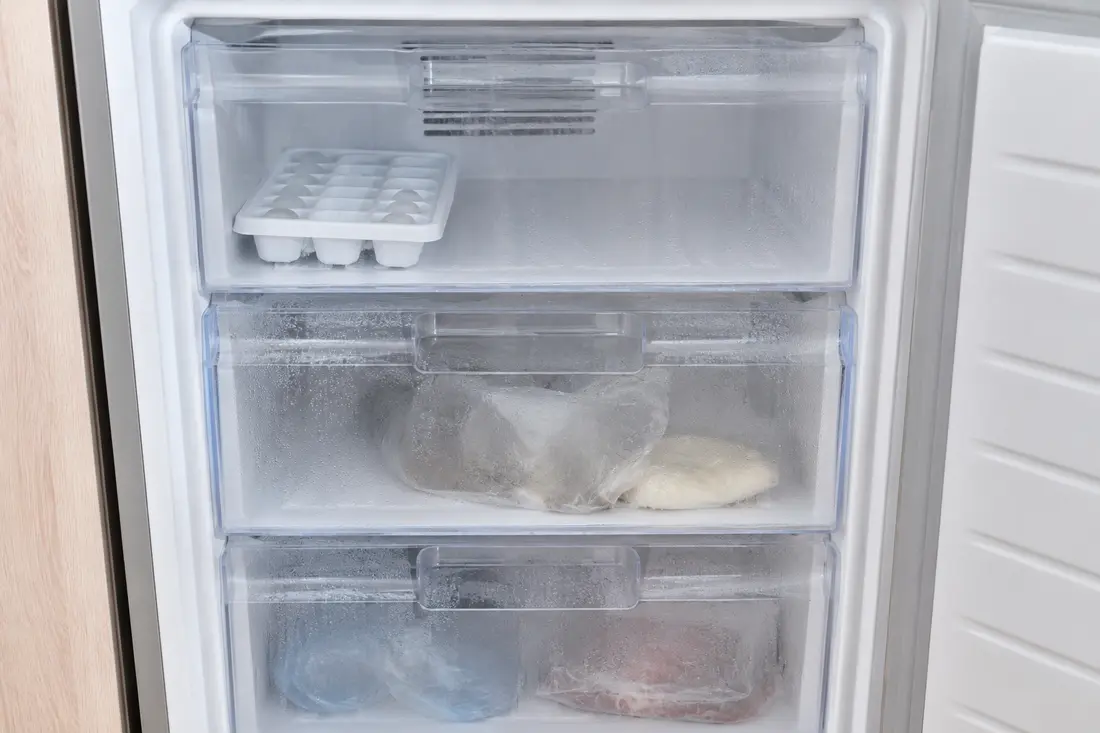
Food is softening or the measured temperature remains above the selected setting. Freezer temperatures can change slowly, so observation and measured temperature are more useful than guessing from one item.
Protect food first
Move perishable food to safe cold storage if temperature is rising. Do not chip ice with a knife or heat the liner with a torch, heat gun, or boiling water.
Common causes
- The door is not sealing or is being held open
- Airflow is restricted by frost, packages, or a failed evaporator fan
- The defrost system is leaving the evaporator blocked with ice
- The compressor, start components, sensor, control, or sealed system has a fault
Several faults can create the same symptom. A diagnosis should identify the failed system before a part is recommended.
How a technician diagnoses the problem
Diagnosis includes an actual temperature measurement, door-seal and airflow inspection, fan and compressor operation, frost pattern, sensor readings, and control response. If the basic systems operate but cooling remains weak, sealed-system performance is assessed with the correct refrigeration procedures.
Any sealed-system work requires appropriate refrigeration tools and procedures. The findings and an upfront estimate are explained before approved work begins.
What to note before the visit
Note the displayed and measured temperature, how long the freezer has been warm, whether the compressor and fans run, and whether heavy frost is visible. Keep the model and serial number available and avoid resetting controls repeatedly, because the operating history can help diagnosis.
Repair or replace?
Repair value depends on the failed component, freezer age and condition, parts availability, food-loss risk, and whether the fault is in an accessible fan or control versus the compressor or sealed system. A measured diagnosis gives you the information needed to compare repair with replacement.